
Access Restricted for EU Residents
You are attempting to access a website operated by an entity not regulated in the EU. Products and services on this website do not comply with EU laws or ESMA investor-protection standards.
As an EU resident, you cannot proceed to the offshore website.
Please continue on the EU-regulated website to ensure full regulatory protection.
Monday Mar 2 2026 09:37

17 min

CFD Trading & Markets: Contracts for Difference (CFDs) have gained significant popularity among traders looking for alternative investment opportunities beyond traditional asset classes.
In the United Arab Emirates (UAE), the growth of CFD trading reflects the increasing interest in financial markets. This article will guide you through the registration process for CFD trading in the UAE, helping you understand the necessary steps, regulatory environment, and best practices to maximize your trading potential.
What Are Contracts for Difference (CFDs)?
CFDs are financial derivatives that allow traders to speculate on the price movements of various assets without actually owning the underlying assets. This means you can trade on asset classes like stocks, commodities, indices, and cryptocurrencies by simply entering a contract with a broker.
When you trade CFDs, you enter into a contract with a broker to exchange the difference in the asset’s price from the time the contract is opened to when it is closed. If you speculate correctly on price movements, you can realize profits; if not, you may incur losses.

While CFDs offer numerous benefits, they also come with significant risks, including:

Overview of Financial Regulation in the UAE
The regulatory landscape in the UAE is primarily governed by the Securities and Commodities Authority (SCA) and the Dubai Financial Services Authority (DFSA) for the Dubai International Financial Centre (DIFC). Understanding these regulatory bodies is essential for safe and compliant CFD trading.
Securities and Commodities Authority (SCA)
The SCA is the main regulatory body overseeing financial markets in the UAE. Its role includes:
Licensing of financial service providers: Ensuring that all financial firms comply with the necessary regulations.
Setting and enforcing regulations: Protecting investors through stringent regulatory measures.
Promoting transparency and integrity: Encouraging a fair market environment.
Dubai Financial Services Authority (DFSA)
The DFSA regulates the DIFC, which is home to numerous financial services firms and businesses. The DFSA enforces its regulations, ensuring compliance and consumer protection within the free zone.
Licensing: Only licensed brokers can offer CFD trading services in the UAE. Ensure your chosen broker is authorized by the SCA or DFSA.

Margin Requirements: Brokers must adhere to specific margin requirements, which regulate how much leverage can be offered to traders.
Disclosure Requirements: Brokers are expected to provide clear information on fees, risks, and terms associated with CFD trading.

Markets.com is a prominent online trading platform that offers a range of financial instruments, including Contracts for Difference (CFDs). As a regulated broker operating in the United Arab Emirates (UAE), Markets.com provides a secure and transparent trading environment for both novice and experienced traders.

Fill Out the Application: Complete the online registration form on the broker's website. This will usually include personal details such as your name, contact information, and date of birth.
Provide Identification: You will need to submit identification documents, such as a passport or national ID, to verify your identity. This step is critical for compliance with anti-money laundering regulations.
Proof of Residence: Most brokers require proof of residence, which can be in the form of utility bills or bank statements.
Financial Information: You may be asked for information regarding your financial situation, trading experience, and investment goals.
Bank Transfer: A common and secure method, but may take several days to process.
Credit/Debit Card: Instant funding, but check for any additional fees.
E-Wallets: Services like PayPal or Skrill may also be available for quick deposits.
Be sure to check the minimum deposit requirements set by your broker.
Start with a Demo Account: Many brokers offer demo accounts to practice trading without real money. Use this opportunity to test your strategies.
Develop a Trading Strategy: Outline your trading goals, risk tolerance, and the strategies you plan to employ.
Monitor the Markets: Stay informed about market trends, economic events, and geopolitical developments that could affect your trades.
Stay Educated: Engage in trading courses, webinars, and relevant literature to improve your skills.
Risk Management: Learn to apply effective risk management strategies, such as setting stop-loss and take-profit orders. This helps protect your capital from significant losses.
Develop a Trading Plan
Creating a comprehensive trading plan will guide your trading activities and help manage risks. A well-structured plan includes:
Goals: Define your short-term and long-term trading objectives.
Risk Management: Establish how much capital you are willing to risk on each trade.
Trading Strategy: Outline the strategies you will use for analysis and execution.
Stay Informed
To be a successful trader, staying updated with market news is crucial. Follow financial news, economic indicators, and developments related to assets you are trading. Utilize analysis tools and technical indicators to refine your strategies.

Maintain Emotional Discipline
Trading can be emotionally taxing. Adopting a disciplined approach helps avoid impulsive decisions driven by emotions. Stick to your trading plan and avoid overreacting to short-term market movements.
Utilize Stop-Loss and Take-Profit Orders
In CFD trading, using stop-loss and take-profit orders is essential for managing risks. These tools allow you to set exit points, helping to secure profits or limit potential losses.
Regularly Review Performance
Regularly assess your trading performance to identify strengths and weaknesses. Analyzing past trades can provide insights into areas for improvement and guide future strategies.

Economic Indicators
Economic indicators play a crucial role in shaping market sentiment and influencing CFD prices. Key indicators to monitor include:
Interest Rates: Central banks set interest rates to influence economic activity. Changes in interest rates can impact currency values and, consequently, CFD pricing.
Employment Data: Employment rates reflect the health of an economy. High employment levels often correlate with economic growth, positively affecting market sentiment.
Inflation Rates: Inflation can erode purchasing power, affecting consumers' ability to spend. Higher inflation often leads to increased volatility in financial markets.
Geopolitical Events
Geopolitical events significantly impact market conditions. Events such as elections, conflicts, and trade agreements can lead to volatility, providing both opportunities and risks for CFD traders. Staying alert to global news can help traders anticipate price movements based on potential geopolitical shifts.
Market Sentiment
Market sentiment often drives short-term price movements. Understanding the broader market mood can be beneficial for CFD traders. Tools such as sentiment analysis can help gauge whether traders are feeling bullish or bearish about specific assets.

Understanding Technical Analysis
Technical analysis involves evaluating historical price data to predict future price movements. It is a valuable tool for CFD traders, as it helps identify trends, support and resistance levels, and potential entry or exit points.
Key Technical Indicators
Moving Averages: Moving averages help smooth out price data and identify trends. Traders often use the simple moving average (SMA) and the exponential moving average (EMA) to make trading decisions.
Relative Strength Index (RSI): The RSI measures the speed and change of price movements, helping traders identify overbought or oversold conditions.
Bollinger Bands: These bands indicate price volatility and can help traders identify potential price breakouts or reversals.
Fibonacci Retracement: This tool helps identify potential support and resistance levels based on key Fibonacci ratios, aiding traders in making informed decisions.
Chart Patterns
Recognizing chart patterns can also assist in making trading decisions. Common patterns include:
Head and Shoulders: This pattern indicates a potential reversal and can signal a change in trend direction.
Double Tops and Bottoms: These patterns suggest potential reversals in the market, signaling traders to consider entering or exiting positions.
Triangles: Triangular patterns indicate potential breakouts, providing traders with opportunities to enter the market in the direction of the breakout.

Understanding Fundamental Analysis
Fundamental analysis involves evaluating the underlying factors that affect asset prices. For CFD traders, considering economic data, company performance, and global events can provide insights into potential market movements.
Key Factors to Consider
Earnings Reports: For stocks, earnings reports are critical indicators of a company's performance. Positive earnings can drive prices up, while disappointing results can lead to declines.
Economic Data Releases: Reports such as GDP growth, consumer spending, and manufacturing data can impact market sentiment and asset prices.
Global Events: Major events, such as policy changes, trade agreements, or geopolitical tensions, can significantly influence market conditions.
Combining Technical and Fundamental Analysis
Successful CFD traders often combine both technical and fundamental analysis to create a more holistic trading strategy. While technical analysis focuses on price action, fundamental analysis provides context around why price movements may occur.
Trading can be a rewarding venture, but it’s fraught with pitfalls. Here are five common mistakes traders often make and tips on how to avoid them.
(1) Lack of a Trading Plan
Many traders enter the market without a defined plan, leading to impulsive decisions. Solution: Create a comprehensive trading plan outlining your goals, strategies, risk tolerance, and entry and exit points. Stick to it consistently.
(2) Overleveraging
Using excessive leverage can amplify both gains and losses, putting your capital at risk. Solution: Employ a conservative approach to leverage. Only use what you can afford to lose, and ensure you understand the risks involved.
(3) Ignoring Risk Management
Failing to implement risk management strategies can result in significant losses. Solution: Use stop-loss and take-profit orders to protect your trades. Determine the maximum amount you’re willing to risk on each trade and adhere to it.
(4) Emotional Trading
Allowing emotions like fear or greed to guide your trading decisions can lead to poor outcomes. Solution: Maintain emotional discipline. Stick to your trading plan, and avoid impulsive actions based on market fluctuations or news.
(5) Neglecting Continuous Learning
The financial markets are constantly evolving, and staying informed is crucial. Solution: Commit to ongoing education. Read books, attend webinars, and stay updated on market trends and economic news to sharpen your trading skills.

By being aware of these common mistakes and taking proactive steps, traders can enhance their chances of success and navigate the markets more effectively.
Registering for CFD trading in the UAE involves several essential steps, from selecting a reputable broker to understanding the regulatory environment. By following the outlined process and adopting best practices, you can navigate the world of CFD trading confidently.
As you embark on this trading journey, remember that continuous education, emotional discipline, and risk management are pivotal for long-term success. Understanding market conditions, employing effective strategies, and adapting to the dynamic financial landscape of the UAE will enhance your trading experience. With the right approach, CFD trading can be a rewarding venture in the vibrant and rapidly evolving markets of the UAE.
Trade wisely, stay informed, and embrace the opportunities presented by CFD markets as you navigate this exciting investment vehicle.
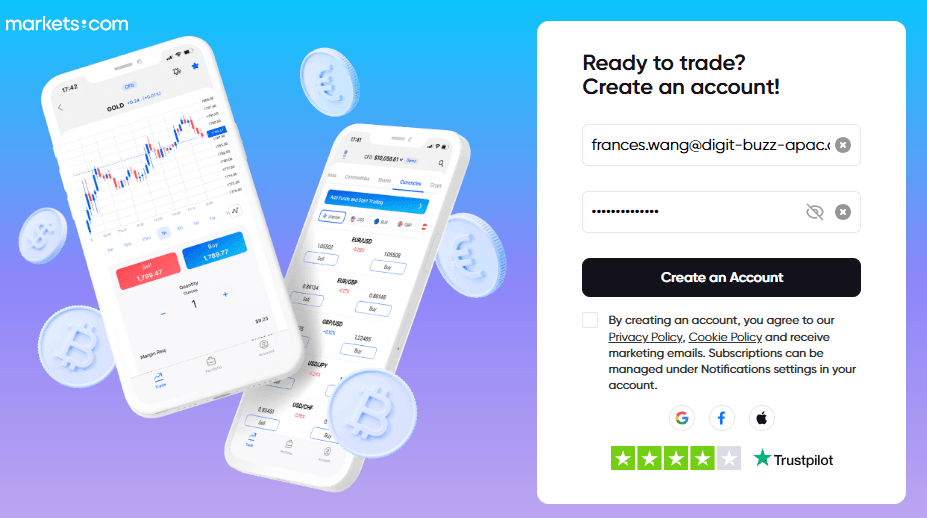
Looking to trade CFDs? Choose Markets.com for a user-friendly platform, competitive spreads, and a wide range of assets. Take control of your trading journey today! Sign up now and unlock the tools and resources you need to succeed in the exciting world of CFDs. Start trading!
Risk Warning: This article is provided for informational purposes only and does not constitute investment advice, investment research, or a recommendation to trade. The views expressed are those of the author and do not necessarily reflect the position of Markets.com. When considering shares, indices, forex (foreign exchange), and commodities for trading and price predictions, remember that trading CFDs involves a significant degree of risk and may not be suitable for all investors. Leveraged products can result in capital loss. Past performance is not indicative of future results. Before trading, ensure you fully understand the risks involved and consider your investment objectives and level of experience. Cryptocurrency CFD trading restrictions may apply depending on jurisdiction.
Latest
View all
Tuesday, 23 June 2026
35 min

Tuesday, 23 June 2026
36 min

Monday, 22 June 2026
15 min


 EN
EN





