
Access Restricted for EU Residents
You are attempting to access a website operated by an entity not regulated in the EU. Products and services on this website do not comply with EU laws or ESMA investor-protection standards.
As an EU resident, you cannot proceed to the offshore website.
Please continue on the EU-regulated website to ensure full regulatory protection.
Wednesday Jul 29 2026 07:49

49 min
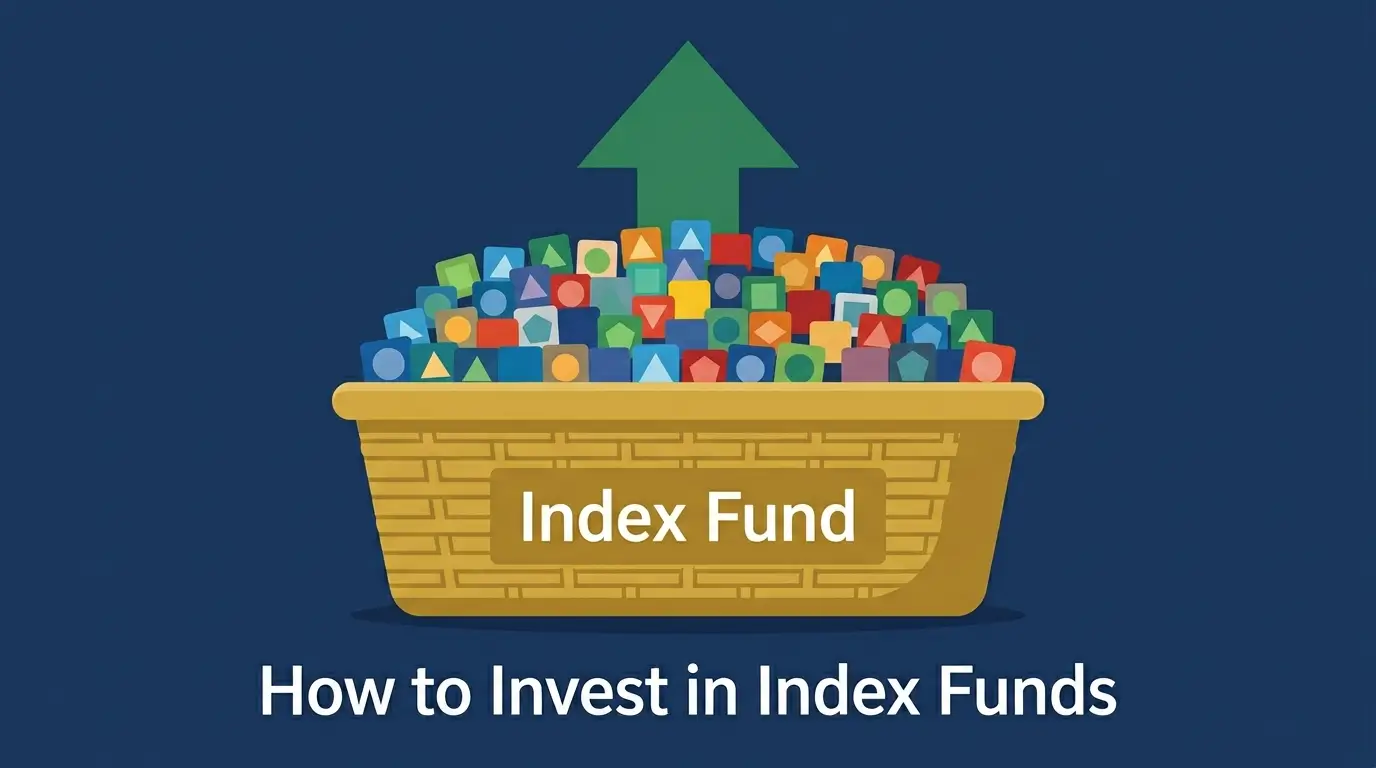
Index funds have become one of the most popular investment options for beginners thanks to their low costs, built-in diversification, and long-term growth potential. Instead of selecting individual stocks, investors can gain exposure to an entire market index, such as the S&P 500 or Nasdaq-100, through a single fund. Whether you're building wealth for retirement or looking for a simple passive investing strategy, understanding how to invest in index funds is an essential first step toward achieving your financial goals.
This guide covers how to invest in index funds, explains what UAE investors should know before getting started, and highlights some of the best index funds for beginners to help you make informed investment decisions.
Index funds are investment funds designed to track the performance of a specific market index, such as the S&P 500, Nasdaq-100, or MSCI World Index. Instead of trying to outperform the market by selecting individual stocks, index funds passively replicate the holdings of their benchmark, giving investors exposure to a broad range of companies through a single investment.
Because they follow a passive investment strategy, index funds typically have lower management fees than actively managed funds. They are widely used by long-term investors seeking diversification, cost efficiency, and steady market returns without the need to frequently buy and sell individual securities.
Index funds are available as mutual funds or exchange-traded funds (ETFs), allowing investors to choose the investment vehicle that best suits their financial goals and preferred investing style. Whether you're saving for retirement or building long-term wealth, index funds can provide a simple and accessible way to participate in the growth of the broader financial markets.

Index funds are available in several forms, each designed to track a specific market segment or investment objective. Choosing the right type depends on your financial goals, risk tolerance, and investment horizon. While all index funds follow a passive investment strategy, they can provide exposure to different asset classes, regions, and industries.
Types of Index Funds at a Glance
Type | What It Tracks | Risk Level | Best For |
|---|---|---|---|
Broad Market Index Funds | Entire stock markets or major indices | Moderate | Long-term wealth building |
International Index Funds | Overseas developed and emerging markets | Moderate to High | Global diversification |
Bond Index Funds | Government and corporate bonds | Low to Moderate | Income and stability |
Sector Index Funds | Specific industries (e.g., technology, healthcare) | High | Thematic investing |
Dividend Index Funds | Companies with consistent dividend payments | Moderate | Passive income and long-term investing |
Broad market index funds track the performance of an entire stock market or a large portion of it, making them one of the most popular choices for long-term investors. These funds provide instant diversification by investing in hundreds or even thousands of companies.
Examples:
Best for: Beginners seeking diversified, long-term growth.
International index funds invest in companies outside your home country, helping diversify your portfolio across global markets. Some focus on developed markets, while others include emerging economies with higher growth potential.
Examples:
Best for: Investors looking for global diversification.
Bond index funds track fixed-income indices composed of government, corporate, or municipal bonds. Compared with stock index funds, they generally offer lower volatility and can help generate regular income.
Examples:
Best for: Conservative investors or those seeking portfolio stability.
Sector index funds focus on a specific industry, such as technology, healthcare, financial services, or energy. Because they concentrate investments in a single sector, they may offer higher growth potential but also carry greater risk.
Examples:
Best for: Investors with a strong outlook on a particular industry.
Dividend index funds track companies with a history of paying consistent dividends. They can provide a combination of capital appreciation and regular income, making them attractive for income-focused investors.
Examples:
Best for: Income investors and those seeking long-term dividend growth.
Ready to trade global index CFDs? Open a Markets.com account today and gain access to major indices, including the US 500, US Tech 100, UK 100, Germany 40, and more. Trade rising and falling markets with advanced trading tools, competitive spreads, and leverage where available. New users can also claim up to $5,000 in bonuses and start practicing risk-free with a free demo account before trading live.
Although the terms index funds and ETFs (Exchange-Traded Funds) are often used interchangeably, they are not exactly the same. An index fund is an investment strategy designed to track the performance of a market index, such as the S&P 500 or FTSE 100. An ETF, on the other hand, is an investment vehicle that trades on a stock exchange. While many ETFs are index-tracking funds, not all ETFs follow an index, some are actively managed. Likewise, index funds can be structured as either mutual funds or ETFs.
For long-term investors, both index funds and index ETFs offer broad market exposure, diversification, and relatively low costs. However, they differ in how they are traded, priced, and managed. Understanding these differences can help you choose the option that best matches your investment goals and trading style.
Feature | Index Funds | ETFs |
|---|---|---|
Definition | Funds that track a market index, typically structured as mutual funds | Investment funds traded on an exchange; can be passive or actively managed |
Trading | Bought and sold once per day after the market closes | Bought and sold throughout the trading day like stocks |
Pricing | Priced at the fund's end-of-day Net Asset Value (NAV) | Market price fluctuates throughout the trading day |
Minimum Investment | Some funds require a minimum initial investment | Usually only the price of one share (or less with fractional shares) |
Liquidity | Lower intraday liquidity | High liquidity with real-time trading |
Expense Ratios | Generally low | Generally low, though they vary by fund |
Automatic Investing | Widely available through recurring investment plans | Available on some platforms but less common |
Best For | Long-term, buy-and-hold investors | Investors seeking flexibility and real-time trading |
Index funds have become one of the most popular investment choices for both beginner and experienced investors because they offer a simple, low-cost way to build a diversified portfolio. Rather than trying to outperform the market by picking individual stocks, index funds aim to match the performance of a benchmark index, such as the S&P 500 or MSCI World Index. This passive investing approach can help reduce costs while providing broad exposure to the market over the long term.
Whether you're saving for retirement, building long-term wealth, or investing for future financial goals, index funds can provide an accessible starting point. Here are some of the key benefits of investing in index funds.
One of the biggest advantages of index funds is instant diversification. A single fund can provide exposure to hundreds or even thousands of companies across different industries and regions. This helps reduce the impact of poor performance from any one company, lowering overall investment risk compared with owning individual stocks.
Because index funds follow a passive investment strategy, they generally have lower management fees than actively managed funds. Lower expense ratios mean more of your investment returns remain in your portfolio over time, allowing the power of compounding to work in your favor.
Historically, major stock market indices have delivered positive returns over long investment periods, although past performance does not guarantee future results. By tracking broad market benchmarks rather than trying to predict short-term price movements, index funds can be an effective way to participate in long-term market growth.
Index funds require minimal day-to-day management. Instead of researching individual companies or timing the market, investors simply hold the fund while it automatically tracks its underlying index. This makes index funds an attractive option for those who prefer a "buy-and-hold" investment strategy.
For new investors, index funds offer an easy way to start investing without needing extensive market knowledge. They provide broad diversification, transparent holdings, and a straightforward investment strategy, making them a popular foundation for long-term portfolios.
Investing in index funds is one of the simplest ways to build a diversified portfolio. Rather than selecting individual stocks, index funds allow you to invest in an entire market index through a single investment. Whether your goal is long-term wealth creation, retirement planning, or generating passive returns, following a clear investment process can help you get started with confidence.
Before choosing an index fund, consider what you want to achieve with your investment. Your objectives, investment horizon, and risk tolerance will influence which type of index fund is most suitable. For example, investors with a long-term growth objective may prefer an equity index fund tracking the S&P 500 or MSCI World Index, while those seeking greater stability may consider bond index funds. Having a clear strategy from the outset can help you stay focused during periods of market volatility.
The next step is selecting the market index that aligns with your investment goals. Broad-market indices such as the S&P 500, MSCI World, or FTSE All-World Index provide diversified exposure to hundreds of companies, making them popular choices for beginner investors. If you have a higher risk appetite or want exposure to a specific sector, you may also consider indices focused on technology, healthcare, or emerging markets.
Multiple fund providers may offer products tracking the same benchmark, so it's important to compare your options before investing. Look beyond historical performance and consider factors such as the expense ratio, tracking accuracy, fund size, liquidity, and dividend policy. Choosing a low-cost fund with a strong record of closely following its benchmark can improve your long-term investment experience.
To buy index funds, you'll need an account with a brokerage or investment platform that provides access to your chosen fund. When comparing platforms, consider the range of available products, account fees, trading costs, and investment tools. If you're investing from the UAE, you may also want to check whether the platform offers access to international index funds or UCITS ETFs listed in Europe.
>> You may also like: 10 Best Index Trading Platforms in the UAE 2026
Once your account is funded, you can purchase your chosen index fund and begin building your portfolio. Many investors use a dollar-cost averaging strategy, investing a fixed amount at regular intervals rather than trying to time the market. Consistent investing, combined with a long-term perspective, can help smooth the effects of short-term market fluctuations and allow your investments to benefit from compound growth over time.
Investing in index funds from the UAE is easier than ever, with many international brokers providing access to global markets and index-tracking funds. Before getting started, it's important to understand your investment options, local considerations, and which index funds are commonly available to UAE investors.
UAE residents can invest in index funds through licensed local or international brokerage platforms that offer access to global financial markets. Depending on the broker, investors can purchase index mutual funds, index ETFs (Exchange-Traded Funds), or other index-tracking investment products listed in the U.S., Europe, and other major markets.
Many UAE investors choose globally diversified funds that track widely followed benchmarks such as the S&P 500, MSCI World Index, or FTSE All-World Index. These funds provide exposure to hundreds or thousands of companies across multiple sectors and countries, making them a popular choice for long-term wealth building.
For investors based in the UAE, UCITS ETFs listed on European exchanges are often a preferred option alongside U.S.-listed ETFs. UCITS funds are regulated under European standards and may offer certain tax and estate planning advantages for non-U.S. investors. Before investing, it's important to compare factors such as fund fees, currency exposure, and the products available through your chosen brokerage platform.
Before investing in index funds, UAE residents should evaluate a few practical factors that can affect their overall returns and investment experience. While access to global markets is widely available, understanding the costs, tax implications, and product choices can help you make more informed decisions.
Choose the right brokerage platform. Compare brokers based on account fees, trading commissions, available markets, and whether they offer access to U.S.-listed ETFs, UCITS ETFs, or mutual funds.
Consider currency exposure. Most global index funds are denominated in U.S. dollars or other foreign currencies. If your funds are in UAE dirhams (AED), exchange rate fluctuations may affect your investment returns.
Understand tax implications. Although the UAE does not levy personal income tax or capital gains tax on individuals, investing in overseas funds may expose you to foreign taxes. For example, U.S.-listed ETFs may be subject to U.S. dividend withholding tax, while tax treatment varies for funds domiciled in Europe or other jurisdictions.
Compare U.S.-listed ETFs and UCITS ETFs. Many UAE investors choose UCITS ETFs because they are regulated under European standards and may offer greater tax efficiency and lower U.S. estate tax exposure for non-U.S. investors. However, the most suitable option depends on your investment objectives and personal circumstances.
UAE investors can access a wide range of index funds and ETFs through international brokerage platforms. Many choose funds that track broad market indices, as these offer instant diversification, relatively low fees, and long-term growth potential. Depending on your broker, you may be able to invest in both U.S.-listed ETFs and UCITS ETFs listed on European exchanges. While the best choice depends on your investment goals and tax considerations, the following funds are among the most widely used by global investors.
Index Fund / ETF | Tracks | Fund Type | Best For |
|---|---|---|---|
Vanguard S&P 500 ETF (VOO) | S&P 500 | U.S.-listed ETF | Beginners seeking exposure to the 500 largest U.S. companies |
iShares Core S&P 500 UCITS ETF (CSPX) | S&P 500 | UCITS ETF | UAE investors looking for a tax-efficient S&P 500 ETF |
Vanguard FTSE All-World UCITS ETF (VWRA) | FTSE All-World Index | UCITS ETF | Investors seeking global diversification in a single fund |
iShares Core MSCI World UCITS ETF (SWDA) | MSCI World Index | UCITS ETF | Long-term investors focused on developed markets |
Invesco QQQ Trust (QQQ) | Nasdaq-100 | U.S.-listed ETF | Growth-oriented investors interested in technology companies |
Vanguard Total Stock Market ETF (VTI) | CRSP US Total Market Index | U.S.-listed ETF | Investors seeking broad exposure to the entire U.S. stock market |
Note: The funds above are provided for informational purposes only and should not be considered investment advice. Availability may vary depending on your brokerage platform, and investors should review each fund's objectives, fees, risks, and tax implications before investing.
For most beginner investors, the best index funds are those that offer broad diversification, low fees, and a strong track record of tracking a major market index. Rather than focusing on niche sectors or actively managed funds, beginners often benefit from investing in broad-market funds that provide exposure to hundreds or even thousands of companies. Popular choices include funds that track the S&P 500, the total U.S. stock markets, or global equity markets, as these can serve as a solid foundation for a long-term investment portfolio.
Index Fund / ETF | Tracks | Why It's Good for Beginners | Best For |
|---|---|---|---|
Vanguard S&P 500 ETF (VOO) | S&P 500 | Low expense ratio, broad exposure to 500 leading U.S. companies | Long-term investors seeking core U.S. market exposure |
Fidelity 500 Index Fund (FXAIX) | S&P 500 | Low-cost mutual fund with strong tracking performance | Investors preferring mutual funds over ETFs |
iShares Core S&P 500 ETF (IVV) | S&P 500 | Highly liquid with a competitive expense ratio | Buy-and-hold investors |
Vanguard Total Stock Market ETF (VTI) | CRSP US Total Market Index | Exposure to more than 3,000 U.S. companies across all market capitalizations | Investors seeking maximum U.S. market diversification |
Vanguard FTSE All-World UCITS ETF (VWRA) | FTSE All-World Index | Diversified exposure to developed and emerging markets in one fund | UAE and international investors seeking global diversification |
iShares Core MSCI World UCITS ETF (SWDA) | MSCI World Index | Covers developed markets with a low-cost, diversified approach | Long-term global investors |
While there is no single "best" index fund for everyone, beginners are generally well served by choosing a low-cost, broadly diversified fund that aligns with their investment objectives. Investors who want exposure to the U.S. market may prefer VOO, IVV, or VTI, while those looking for global diversification, particularly investors outside the United States may find VWRA or SWDA to be suitable long-term core holdings.
The short answer is not exactly. When you invest in a traditional index fund or index ETF, you own shares of the fund, which is designed to track the performance of a market index. By contrast, Contracts for Difference (CFDs) do not give you ownership of the underlying fund. Instead, they allow you to speculate on the price movements of an index or, in some cases, an ETF without purchasing the asset itself.
Many CFD brokers offer index CFDs that track major benchmarks such as the S&P 500, Nasdaq-100, FTSE 100, and Germany 40. Some platforms also provide ETF CFDs, enabling traders to gain exposure to popular index ETFs without owning the fund. This makes CFDs more suitable for traders seeking short-term market opportunities, while traditional index funds are generally better suited to long-term investors focused on wealth accumulation.
Ultimately, the right choice depends on your investment objectives. If your goal is to build a long-term portfolio through passive investing, purchasing an index fund or ETF may be more appropriate. If you're looking to trade market movements with the flexibility to profit from both rising and falling markets, index CFDs may offer an alternative approach.
>> Learn more: How to Trade Indices CFDs in the UAE: A Complete Guide
Feature | Index Funds | Index CFDs |
|---|---|---|
Ownership | You own shares of the fund | No ownership of the underlying asset |
Investment Objective | Long-term investing and wealth accumulation | Short- to medium-term trading and speculation |
Underlying Asset | Index mutual fund or ETF | CFD contract tracking an index or ETF |
Leverage | Typically no leverage | Leverage may be available (subject to regulations) |
Ability to Short Sell | Generally no | Yes, you can trade rising or falling markets |
Trading Hours | Depends on the fund or exchange | Often extended trading hours, depending on the broker |
Holding Costs | Fund management fees (expense ratio) | Spread, overnight financing charges, and other applicable fees |
Dividend Treatment | Investors may receive dividends or reinvestments | No ownership of dividends, though dividend adjustments may apply |
Best For | Long-term, passive investors | Active traders seeking flexibility and leverage |
>> Read more: Index CFDs vs ETFs vs Futures: Which Is Best?
If you're looking to gain exposure to major stock market indices without owning an index fund or ETF, Markets.com offers a convenient way to trade index CFDs. Through a single trading account, you can access a wide range of global indices, including the US 500 (S&P 500), US Tech 100 (Nasdaq-100), UK 100 (FTSE 100), Germany 40 (DAX), and Japan 225 (Nikkei 225), allowing you to speculate on price movements in both rising and falling markets.
Getting started with index CFD trading on Markets.com is straightforward:
Create a trading account by completing the online registration process and verifying your identity. Once your account is approved, you can fund it using one of the available payment methods.

Browse the available global index CFDs and select the market that best matches your trading strategy. Popular choices include the US 500, US Tech 100, UK 100, and Germany 40, each providing exposure to a different segment of the global equity market.
Before placing a trade, review price charts, technical indicators, market news, and economic events that could influence index prices. Developing a trading plan can help you identify potential entry and exit points.
Decide whether you expect the index to rise (buy/long) or fall (sell/short), choose your position size, and apply risk management tools such as stop-loss and take-profit orders if appropriate.

After your trade is open, continue monitoring market conditions and adjust your strategy if necessary. You can close your position whenever you choose or when your predefined risk management levels are reached.
Index funds are widely regarded as one of the simplest and most cost-effective ways to build long-term wealth. However, like any investment, they come with both advantages and risks. Understanding these can help you decide whether index funds align with your financial goals and risk tolerance.
Beginners can buy index funds by opening an account with a brokerage or investment platform that offers access to index mutual funds or ETFs. After funding the account, choose an index fund that matches your financial goals, such as one tracking the S&P 500 or a global stock market index, and place your order. Many investors also set up automatic monthly contributions to build their portfolios over time through dollar-cost averaging.
Investing $100 per month in an S&P 500 index fund can help you build wealth over the long term through the power of compound returns. The actual value of your investment will depend on factors such as market performance, investment duration, and fees. While past performance does not guarantee future results, consistently investing a fixed amount each month can help smooth out the effects of market volatility and encourage disciplined investing.
For example, if the S&P 500 were to generate an average annual return over several decades, regularly investing $100 each month could potentially grow into a substantial portfolio over time. However, investment returns are never guaranteed, and the value of your investments can rise or fall.
The best index funds for beginners are typically those that offer broad diversification, low fees, and long-term growth potential. Popular choices include:
Vanguard S&P 500 ETF (VOO) – Tracks the S&P 500 and provides exposure to 500 leading U.S. companies.
Vanguard Total Stock Market ETF (VTI) – Offers diversified exposure to the entire U.S. stock market.
iShares Core S&P 500 ETF (IVV) – A low-cost ETF that closely tracks the S&P 500 Index.
Vanguard FTSE All-World UCITS ETF (VWRA) – Provides global diversification across developed and emerging markets.
iShares Core MSCI World UCITS ETF (SWDA) – Tracks large and mid-cap companies across developed markets.
The right index fund depends on your investment goals, time horizon, risk tolerance, and geographic preferences. Many beginners start with a broad-market index fund as the core of their long-term investment portfolio before adding more specialized investments over time.
Risk Warning: This article is provided for informational purposes only and does not constitute investment advice, investment research, or a recommendation to trade. The views expressed are those of the author and do not necessarily reflect the position of Markets.com. When considering shares, indices, forex (foreign exchange), and commodities for trading and price predictions, remember that trading CFDs involves a significant degree of risk and may not be suitable for all investors. Leveraged products can result in capital loss. Past performance is not indicative of future results. Before trading, ensure you fully understand the risks involved and consider your investment objectives and level of experience. Cryptocurrency CFD trading restrictions may apply depending on jurisdiction.
Latest
View all
Wednesday, 23 September 2026
10 min

Tuesday, 22 September 2026
35 min

Tuesday, 22 September 2026
25 min


 EN
EN





