
Access Restricted for EU Residents
You are attempting to access a website operated by an entity not regulated in the EU. Products and services on this website do not comply with EU laws or ESMA investor-protection standards.
As an EU resident, you cannot proceed to the offshore website.
Please continue on the EU-regulated website to ensure full regulatory protection.
Thursday Aug 13 2026 08:31

36 min

Gold and platinum are both precious metals, but they do not play the same role in global markets. Gold is primarily a financial, reserve and jewellery asset, whereas platinum relies more heavily on automotive and industrial demand. Platinum is physically rarer, yet rarity alone does not determine price. Gold is generally more liquid, while platinum can react more sharply to changes in manufacturing activity or mine supply.
This platinum vs gold guide compares price behaviour, demand, liquidity and volatility, then explains market access, CFD trading mechanics and the principal risks for newer traders.
The essential difference is their market function: gold behaves more like a global financial asset, while platinum combines precious-metal characteristics with substantial industrial exposure. Both are commonly priced in US dollars per troy ounce, but their demand cycles are not identical.
Gold is held by central banks, investment funds and private buyers, as well as being used in jewellery and technology. The World Gold Council's market primer describes a broad demand base in which investment or consumer demand can become more influential at different points in the economic cycle.
That depth supports gold's reputation as a potential store of value during financial stress. However, “safe haven” describes a tendency, not a promise: gold can fall when real yields rise, the dollar strengthens or investors sell liquid assets to raise cash.
Also read Gold Price Forecast 2026: Is $6,000 Still Within Reach?
Platinum is used in vehicle emissions systems, chemical processing, glassmaking, jewellery and investment products. The World Platinum Investment Council groups demand automotive, industrial, jewellery and investment segments.
Mining is more geographically concentrated than gold production, so operational disruption in a major producing region can matter quickly. Platinum's smaller market and dependence on manufacturing also help explain why it may be more cyclical and volatile.
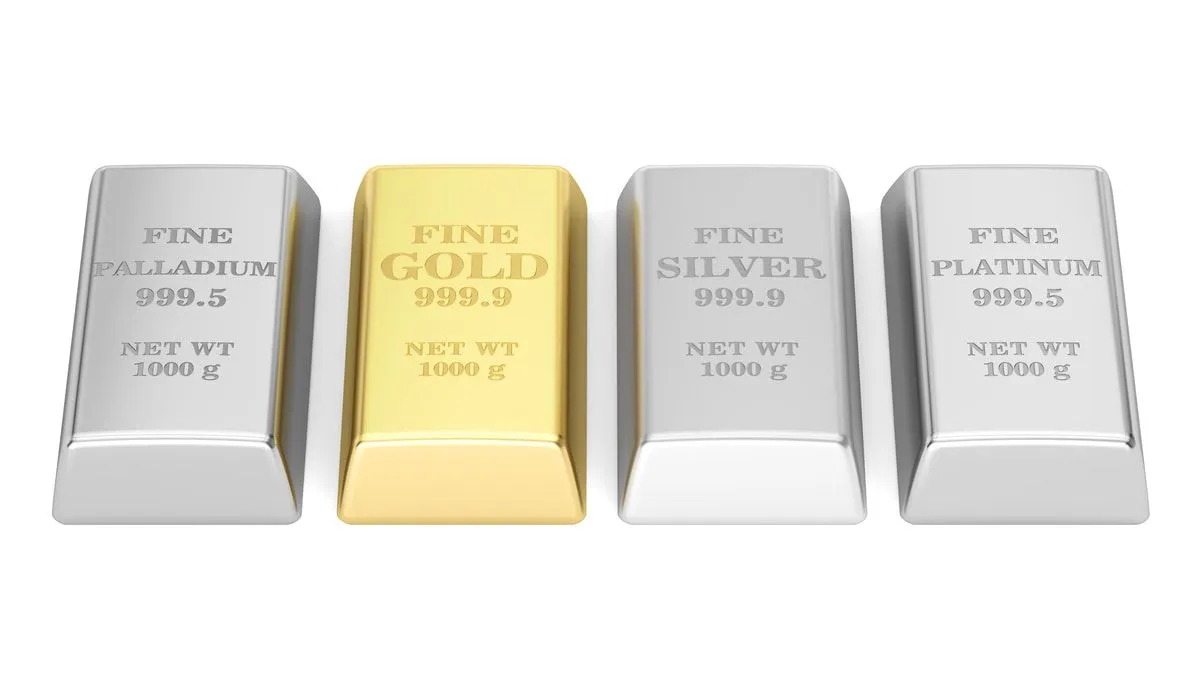
Gold is generally the deeper financial market, whereas platinum is the more industrially sensitive metal. Neither is automatically better: the relevant comparison depends on the market catalyst, time horizon, instrument and risk being taken.
Comparison point | Gold | Platinum | Why it matters to traders |
|---|---|---|---|
Main market role | Financial, reserve and precious metal | Precious and industrial metal | Different catalysts can dominate each price |
Main demand sources | Investment, central banks, jewellery and technology | Automotive, industrial, jewellery and investment | Platinum is more tied to the business cycle |
Relative rarity | Higher annual production | Lower annual production | Rarity alone does not determine market value |
Supply profile | More geographically diversified | More geographically concentrated | Platinum can be sensitive to regional disruption |
Market liquidity | Generally deeper | Generally smaller | Liquidity can affect spreads and execution |
Typical volatility | Often lower, but still material | Often higher and more event-sensitive | Volatility affects stop distance and position size |
Safe-haven behaviour | More established | Less consistent | Risk-off periods may affect the metals differently |
Common access | Bullion, ETFs, futures and CFDs | Bullion, ETFs, futures and CFDs | Costs, leverage and availability vary |
Gold's extensive above-ground stocks and platinum recovered from autocatalysts can both return to the market, although platinum's industrial balance may change more quickly.
The gold vs platinum price relationship changes with supply, end-use demand and investor behaviour. Each metal has traded at a premium during different periods.

Year-to-date price comparison: Platinum vs Gold. Source: Google Finance
Scarcity is only one part of price formation. Gold benefits from large investment markets, central-bank ownership, broad jewellery demand and deep liquidity, supporting a higher price even when more gold is mined annually.
Platinum demand is narrower and more cyclical. If manufacturers expect weaker vehicle or industrial production, reduced demand can outweigh physical rarity. Available stocks, recycling, fund flows and expectations about future mine supply also influence the price.
Platinum traded at a premium during several historical periods, including before the 2008 financial crisis, when strong industrial demand met constrained supply. The global downturn then damaged cyclical demand while financial stress increased interest in gold.
The balance shifted further as diesel vehicles lost market share in some regions and gold received stronger investment demand. This is not permanent: emissions rules, vehicle technology, recycling and financial flows can change it again. Any chart should use comparable LBMA benchmark prices and state its date and currency.
Both metals respond to the dollar, interest rates and global sentiment, but gold is usually more sensitive to financial demand and platinum to industrial conditions. Understanding that distinction is more useful than assuming all precious metals rise and fall together.

Gold and platinum are usually quoted in US dollars, so a stronger dollar can make them more expensive for non-dollar buyers. Interest-rate expectations, real yields, global growth, commodity flows and speculative positioning can also affect both.
Correlation is unstable. Weak economic data might support gold through rate-cut expectations while hurting platinum through lower manufacturing forecasts.
Gold traders commonly monitor:
Real yields are particularly relevant because gold pays no income. When the inflation-adjusted return on bonds rises, the opportunity cost of holding gold may increase; when real yields fall, that headwind can ease. These relationships are tendencies rather than fixed rules, and the latest demand evidence should be checked against World Gold Council data.
Also read Factors Affecting Gold Price 2026: What Drives the Price of Gold?
Platinum traders focus more heavily on vehicle production, catalytic-converter demand, manufacturing surveys and industrial investment. Emissions standards and substitution between platinum and palladium can alter the quantity required by vehicle manufacturers.
Supply deserves equal attention. Mine disruption in a major producing region may tighten availability, while recycling can offset part of a shortfall. Jewellery, investment and prospective hydrogen uses also matter, but emerging applications do not guarantee future demand.
Indicator or event | Metal usually more sensitive | Reason |
|---|---|---|
Fed decision or real-yield change | Gold | Direct effect on opportunity cost and financial flows |
Geopolitical shock | Gold | More established defensive demand |
Manufacturing PMI | Platinum | Greater industrial exposure |
Vehicle-production change | Platinum | Autocatalyst demand |
Major mining disruption | Platinum | More concentrated primary supply |
Gold may be more responsive to financial uncertainty, while platinum may offer clearer exposure to an industrial recovery or supply shock. That is a framework for analysis, not a forecast that one metal must outperform.
During geopolitical stress, recession fears or falling real yields, gold may attract defensive and investment demand. Even then, a rising dollar or urgent demand for cash can push it lower, and safe-haven flows may reverse when sentiment stabilises.
Platinum can also rise during broad precious-metal rallies, but a recession may weaken its industrial demand. This helps explain why the metals' correlation can fall during periods of economic stress.
Platinum may respond more strongly when manufacturing and vehicle production improve or when mine and recycling supply tighten. Gold may participate if the wider commodity complex is firm, but it is less directly linked to factory activity.
The direction is not automatic: manufacturers can substitute metals or use inventories, while higher prices may encourage recycling.
Market scenario | Metal likely to be more sensitive | Main reason | Caveat |
|---|---|---|---|
Geopolitical stress | Gold | Defensive financial flows | A stronger dollar may offset demand |
Manufacturing recovery | Platinum | Industrial consumption | Inventories and supply still matter |
Falling real yields | Gold | Lower opportunity cost | The historical relationship can break down |
South African supply disruption | Platinum | Concentrated mine production | Recycling may soften the shortage |
Automotive technology shift | Platinum | Autocatalyst exposure | The direction depends on the technology |
Before choosing a market, define the catalyst, holding period, liquidity needs and maximum tolerable loss. Bullion and leveraged CFDs carry very different risks.
Gold and platinum can be accessed through physical bullion, exchange-traded products, futures and CFDs. The appropriate route depends on whether the objective is ownership, longer-term exposure, hedging or short-term price speculation.
Method | Ownership | Leverage and expiry | Main costs and considerations |
|---|---|---|---|
Physical bullion | Direct metal ownership | Normally no leverage or expiry | Dealer premium, storage, insurance, and resale spread |
ETF or ETC | Shares in a listed vehicle | Normally no built-in leverage or expiry | Management fee, tracking, and market liquidity |
Futures | Standardised exchange contract | Leveraged and dated | Margin, expiry, rollover, and contract size |
CFD | No ownership of the metal | Leveraged; terms depend on product | Spread, margin, financing, and counterparty exposure |
CME Group publishes separate gold and platinum futures specifications. Check contract size, tick value, expiry and margin rather than applying gold terms to platinum.
A contract for difference settles the change between the opening and closing price; it does not transfer ownership of a bar or coin. A trader can usually select Buy for a rising-price view or Sell for a falling-price view, subject to product availability.
CFDs use margin, so cash committed is smaller than notional exposure, magnifying gains and losses relative to that margin. The spread is an immediate cost, while positions held beyond the cut-off may incur overnight financing.
With $5,000 of notional exposure, a 2% favourable move produces a $100 gross gain and a 2% adverse move a $100 gross loss, before spreads and financing.
At a hypothetical 10% margin, $500 supports that exposure and the $100 move equals 20% of margin. This illustrates leverage, not a current Markets.com specification.
Both metals can move against a well-researched view, and CFDs add leverage and execution risk to the underlying price risk. The differences between gold and platinum should influence position size, stop placement and the events being monitored.
Gold can fall when yields or the dollar rise, or when defensive positioning unwinds. Its liquidity does not eliminate sharp moves around inflation data, central-bank decisions or geopolitical headlines.
Platinum faces industrial-cycle risk, concentrated mine supply and a smaller trading market. This can produce wider spreads or faster moves during supply news. Long-term changes in vehicle technology can also reshape demand in ways that historical averages fail to capture.
Leverage can exhaust available margin quickly and may lead to automatic close-out. Spreads can widen in thin or fast markets, while overnight financing can make a position more expensive to hold.
A stop-loss limits intended exposure but cannot guarantee the execution price. Gaps and slippage may produce a larger loss, and traders must also consider the provider, governing entity and protections applying in their jurisdiction.
Check the contract specification before every trade, particularly when switching between gold and platinum. Calculate position size from the distance between entry and stop, the value per price movement and the amount you can afford to lose; do not simply use the maximum leverage available.
A demo account can help test order placement and cost assumptions. Also monitor the economic calendar, avoid treating correlation or ratio extremes as guarantees, and review overnight exposure before the daily market break.
Once you understand the different price drivers, you can turn that analysis into a structured process. UAE traders should begin with regulatory verification and risk planning rather than choosing a position from a headline alone.
Research and risk management cannot remove losses, but they can make each decision more consistent and easier to review.
A gold or platinum CFD lets you speculate on price changes without owning or storing the underlying metal. You may take a long or short position where available, but leverage means both favourable and adverse moves are magnified relative to the margin committed.
Step 1: Sign Up for an Account
Visit Markets.com or download the app, click "Create Account," and register with your email or a Google/Facebook/Apple account.

Step 2: Verify Your Identity (KYC)
Complete the KYC check by entering your personal details and uploading proof of identity and address.
Step 3: Fund Your Account
Deposit via card, bank transfer, e-wallet, Apple Pay, or Google Pay. The minimum deposit is $100.

Step 4: Find Gold and Platinum and Place the Trade
Search for the relevant instrument, such as Gold or Platinum where available. Open its information panel and review the currency, spread, trading hours, margin, financing and contract size. Enter a position size based on notional exposure and planned risk, then select Buy or Sell only after checking the direction and order details.

Step 5: Manage and Close Your Positions
Monitor open trades, adjust risk settings as needed, and close positions manually or automatically when targets are hit.
New to Markets.com? Claim a generous deposit bonus on your first trade. Hurry—this offer is only available for a limited time.

The platinum vs gold comparison is mainly a contrast between a deep financial and safe-haven market and a smaller market with greater industrial exposure. Platinum's rarity does not guarantee a higher price, while gold's defensive reputation does not make it risk-free. The gold-to-platinum ratio can provide context, but it cannot identify fair value or time a reversal by itself. Bullion, ETFs, futures and CFDs provide different forms of access, costs and risk. Markets.com offers relevant CFD instruments in supported jurisdictions, but traders should verify current specifications and understand leverage before taking a position.
Neither is universally better. Gold generally offers deeper liquidity and more established safe-haven demand, while platinum is more exposed to industrial growth and supply constraints. The relevant choice depends on the objective, timeframe, instrument, costs and ability to tolerate volatility.
Rarity alone does not set market price. Gold benefits from broader investment, central-bank and jewellery demand and a larger, more liquid market. Platinum's smaller market depends more heavily on cyclical industrial demand, particularly vehicle manufacturing.
Platinum is often more volatile because its market is smaller, supply is geographically concentrated and demand is sensitive to manufacturing and vehicle production. Volatility changes over time, however, so current data should be checked rather than assuming platinum will always move more.
Sometimes, because both metals respond to the US dollar, interest rates and commodity flows. Their correlation can weaken when safe-haven demand supports gold while recession concerns hurt platinum, or when an industrial or mining event affects platinum independently.
The ratio normally divides the gold price per troy ounce by the platinum price per troy ounce. A result above one means gold costs more per ounce. It provides relative-price context but is not a standalone buy or sell signal.
Where available, CFDs provide long or short exposure without physical ownership. They also involve leverage, margin, spreads and possible overnight financing. Beginners should understand the contract specifications, practise with a demo account and examine possible loss scenarios before considering a live trade.
Risk Warning: This article is provided for informational purposes only and does not constitute investment advice, investment research, or a recommendation to trade. The views expressed are those of the author and do not necessarily reflect the position of Markets.com. When considering shares, indices, forex (foreign exchange), and commodities for trading and price predictions, remember that trading CFDs involves a significant degree of risk and may not be suitable for all investors. Leveraged products can result in capital loss. Past performance is not indicative of future results. Before trading, ensure you fully understand the risks involved and consider your investment objectives and level of experience. Cryptocurrency CFD trading restrictions may apply depending on jurisdiction.
Latest
View all
Wednesday, 23 September 2026
10 min

Tuesday, 22 September 2026
35 min

Tuesday, 22 September 2026
25 min


 EN
EN





