
Access Restricted for EU Residents
You are attempting to access a website operated by an entity not regulated in the EU. Products and services on this website do not comply with EU laws or ESMA investor-protection standards.
As an EU resident, you cannot proceed to the offshore website.
Please continue on the EU-regulated website to ensure full regulatory protection.
Wednesday Apr 22 2026 00:00

3 min
A fervent debate is currently underway in Poland concerning the optimal strategy for financing the modernization and advancement of the nation's military capabilities. At the heart of this discourse stands Poland's Finance Minister, Andrzej Domański, who has explicitly voiced his staunch opposition to any plans that entail the sale of the Polish central bank's gold reserves to fund military expenditures. Domański has characterized these proposals, supported by both Polish President Andrzej Duda and Central Bank Governor Adam Glapiński, as nothing more than a "mirage," asserting that relying on uncertain future central bank profits is an impractical and irresponsible strategy.
In an interview with the Financial Times, Domański emphasized the urgent need to leverage the European Union's "European Security Action" (Safe) fund, which provides Poland with concessional loans amounting to up to €150 billion. The minister clarified that these funds are available and must be utilized promptly to ensure the financing of essential military modernization. While acknowledging that utilizing these loans might involve certain compromises on flexibility for non-military investments, Domański considers this trade-off acceptable compared to the unreliable alternative. He pointed out that the central bank will not be able to ascertain its final profitability until the spring of 2027, rendering a wait until then for critical defense needs illogical.
Central Bank Governor Adam Glapiński had previously suggested, in conjunction with President Duda, the sale of a portion of Poland's gold reserves as an alternative solution to borrowing from the EU. Glapiński indicated that this move could be temporary, with the possibility of repurchasing the gold later. However, Domański has strongly rejected this proposition, citing that any potential gains from selling gold could be rapidly eroded by fluctuations in global foreign exchange markets, especially given the central bank's recent incurred losses. The minister affirmed that the government, led by Prime Minister Donald Tusk, is committed to military modernization plans and will not gamble national security on uncertain financial projections.
These statements emerge as the Polish government, under Donald Tusk, seeks to overcome any bureaucratic or political hurdles that might impede access to European funds. The government is engaged in negotiations with the European Commission to redirect the "Safe" fund loans into an existing Polish defense fund, thereby streamlining the expenditure process without requiring additional approvals. In this context, Domański also disclosed that Poland is exploring another international defense financing mechanism known as the "Multilateral Defence Mechanism" (MDM), championed by countries such as the United Kingdom, the Netherlands, and Finland. This mechanism aims to issue bonds backed by guarantees from member states to finance defense procurement, thereby achieving economies of scale and reducing financing costs. Domański considers this mechanism a "highly attractive option" for Poland, suggesting it could be a significant complement to the "Safe" fund.
In a separate development, both Domański and Glapiński utilized their presence in Washington for the IMF's spring meetings to promote Poland's bid to join the G20. The United States, as the current chair of the group, has invited Poland to participate as a guest nation at the G20 summit scheduled to take place in Miami in December of this year.
In essence, this defense funding debate reflects the Polish government's commitment to a comprehensive European strategy for enhancing security, while rejecting any paths that could jeopardize the nation's financial stability or impede the military's modernization efforts.
Risk Warning: This article is provided for informational purposes only and does not constitute investment advice, investment research, or a recommendation to trade. The views expressed are those of the author and do not necessarily reflect the position of Markets.com. When considering shares, indices, forex (foreign exchange), and commodities for trading and price predictions, remember that trading CFDs involves a significant degree of risk and may not be suitable for all investors. Leveraged products can result in capital loss. Past performance is not indicative of future results. Before trading, ensure you fully understand the risks involved and consider your investment objectives and level of experience. Cryptocurrency CFD trading restrictions may apply depending on jurisdiction.
Latest
View all
Tuesday, 11 August 2026
5 min

Tuesday, 11 August 2026
6 min

Tuesday, 11 August 2026
7 min

Tuesday, 11 August 2026
Indices
Gold Price Today, August 12, 2026: XAU/USD Rises 0.5% Near $4,400 Ahead of US CPI

Tuesday, 11 August 2026
Indices
Oil Nears $90 as Fading U.S.-Iran Deal Hopes Renew Hormuz Supply Fears
Tuesday, 11 August 2026
Indices
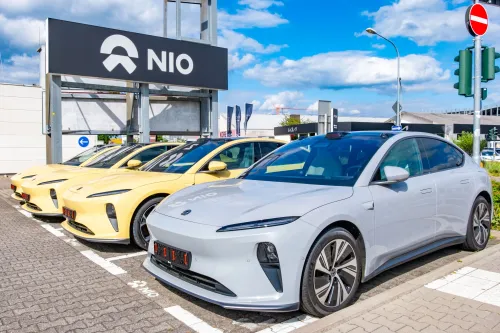
NIO Stock News Today: Shares Slide as BlackRock Trims Stake Despite Record ES9 Demand

Tuesday, 11 August 2026
Indices
USD to JPY Exchange Rate May Have Peaked, Eurizon Sees Yen Strengthening to 125

Tuesday, 11 August 2026
Indices
Supermicro Stock Rallies as Margin Recovery and FY2027 Outlook Eclipse Q4 Revenue Miss

Tuesday, 11 August 2026
Indices
Bitcoin Price Falls Below $64,000 as Hormuz Tensions and Strategy Sales Weigh


 EN
EN





