
Access Restricted for EU Residents
You are attempting to access a website operated by an entity not regulated in the EU. Products and services on this website do not comply with EU laws or ESMA investor-protection standards.
As an EU resident, you cannot proceed to the offshore website.
Please continue on the EU-regulated website to ensure full regulatory protection.
Thursday Jun 4 2026 02:55

7 min
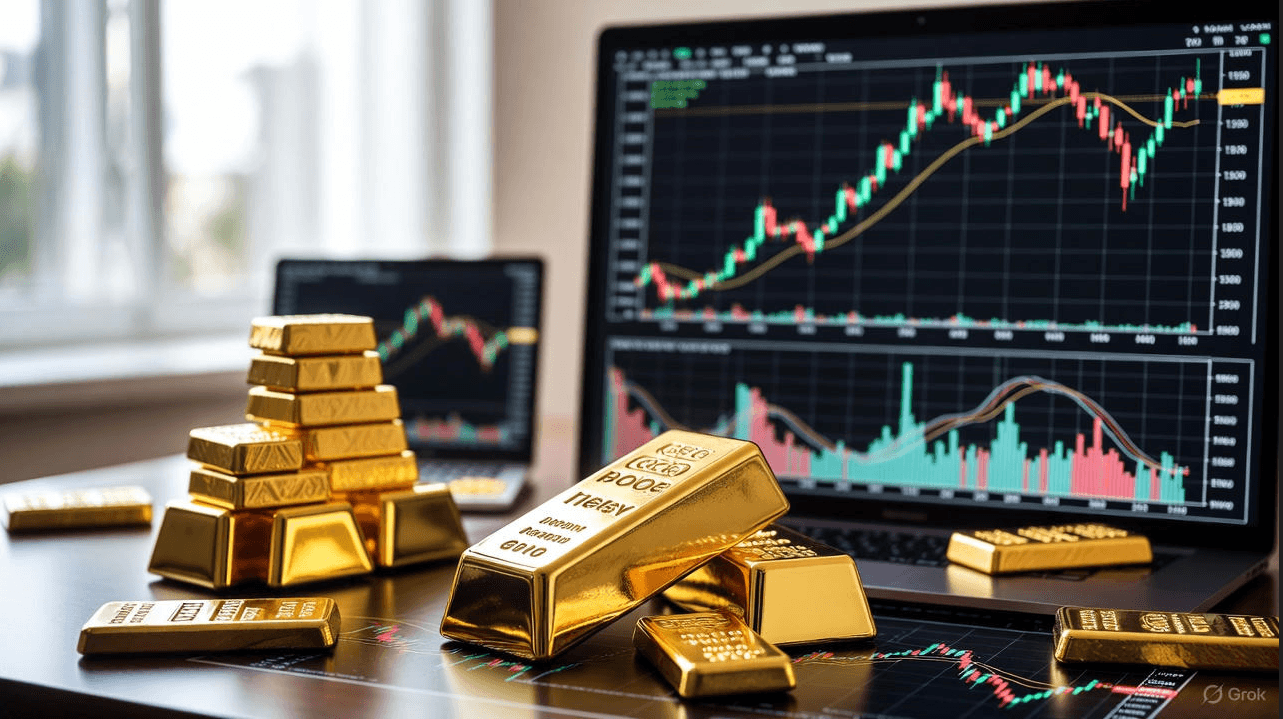
Gold Price Today: Gold prices traded slightly higher on June 04 as investors closely monitored a fresh batch of US economic data that could influence the Federal Reserve's future policy decisions.
The XAU/USD pair posted modest gains during the session, supported by cautious market sentiment and ongoing demand for safe-haven assets. As traders await clearer signals on inflation, economic growth, and interest rates, gold remains a key focus across global financial markets.
The precious metal attracted renewed buying interest as market participants prepared for several important economic reports from the United States.
Data related to employment, business activity, and consumer spending are expected to provide valuable insights into the strength of the world's largest economy. These indicators are particularly important because they help shape expectations regarding future Federal Reserve policy.
Uncertainty surrounding the economic outlook has encouraged many investors to maintain exposure to gold. While the gains in XAU/USD have been relatively modest, the upward movement reflects continued caution among traders who are seeking protection against potential market volatility.
Investor sentiment remains mixed as concerns about slowing economic growth compete with signs of resilience in certain sectors. This environment has supported demand for defensive assets, including gold. Historically, the precious metal performs well during periods of uncertainty because it is widely viewed as a store of value.
As global markets navigate changing economic conditions, many investors continue to allocate funds to gold as part of broader risk-management strategies. This steady demand has helped support prices even as other asset classes experience fluctuations.
One of the primary factors affecting gold prices is the outlook for US interest rates. Investors are closely monitoring economic data for clues about whether the Federal Reserve may eventually begin easing monetary policy.
Any signs that inflation is cooling or economic growth is slowing could strengthen expectations for future rate reductions.
Gold generally benefits when interest rates are expected to decline because the opportunity cost of holding a non-yielding asset becomes lower. This relationship has kept traders focused on every new piece of economic information that could alter the policy outlook.
Inflation trends continue to play a critical role in shaping market expectations. While inflation has eased from previous highs, policymakers remain cautious about declaring victory over rising prices. Investors are therefore paying close attention to upcoming inflation reports that may provide additional clarity on the Federal Reserve's next steps.
A softer inflation environment could increase the likelihood of more accommodative monetary policy, potentially providing additional support for gold prices. Conversely, stronger-than-expected inflation readings may limit gains in the precious metal by reinforcing expectations of higher interest rates for longer.
The US dollar remains one of the most influential factors for gold prices. Since gold is priced in dollars, fluctuations in the currency can significantly impact international demand.
A weaker dollar often makes gold more affordable for buyers using other currencies, which can increase global demand for the precious metal.
Recent trading sessions have seen mixed performance in the currency market, creating opportunities for gold to maintain upward momentum. Traders continue to monitor both economic data and central bank commentary for clues regarding the future direction of the dollar.
US Treasury yields also play a crucial role in determining gold's performance. Rising yields tend to reduce the appeal of gold because investors can earn returns from interest-bearing assets. On the other hand, declining yields often provide support for gold by making fixed-income investments less attractive relative to the precious metal.
Market participants remain attentive to yield movements as they assess broader economic conditions. Any sustained decline in Treasury yields could contribute to further gains in XAU/USD, particularly if accompanied by softer economic data.
Safe-Haven Demand Continues to Support Gold Prices
Beyond economic factors, geopolitical developments continue to influence gold markets. Ongoing international tensions and regional conflicts have reinforced gold's role as a safe-haven asset.
During periods of heightened uncertainty, investors often seek refuge in assets that have historically preserved value.
This demand has remained an important source of support for gold prices throughout the year. Even when economic indicators point to resilience, geopolitical concerns can encourage investors to maintain defensive positions.
Commodity market today: Gold also remains popular among investors seeking portfolio diversification. Because the metal often behaves differently from stocks and other financial assets, it can help reduce overall portfolio risk. This characteristic has contributed to consistent demand from institutional investors, central banks, and retail traders alike.
As economic and political uncertainties persist, diversification strategies are likely to continue supporting long-term interest in gold.
Gold Price Prediction Next 5 Years: From a technical perspective, XAU/USD remains supported by strong buying interest near key price zones.
Traders have continued to defend major support levels, preventing deeper declines and maintaining the broader bullish structure.
Market analysts suggest that sustained trading above these support areas could encourage additional buying activity in the near term. Technical indicators currently point to cautious optimism among traders monitoring gold's next move.
While the overall tone remains constructive, traders are also watching nearby resistance levels that could influence short-term price action. A successful breakout above recent highs may strengthen bullish momentum and attract further investment flows into the gold market.
The next phase of price movement will likely depend on upcoming economic data releases and evolving expectations regarding Federal Reserve policy.
Gold prices posted modest gains on June 04 as investors assessed key US economic indicators and monitored developments related to Federal Reserve policy. Support from safe-haven demand, fluctuations in the US dollar, and movements in Treasury yields helped lift the XAU/USD pair during the session.
Looking ahead, upcoming economic reports and inflation data are expected to play a crucial role in determining gold's direction. As uncertainty continues to influence market sentiment, gold is likely to remain an important asset for investors seeking stability and diversification in an evolving economic environment.
Risk Warning: This article is provided for informational purposes only and does not constitute investment advice, investment research, or a recommendation to trade. The views expressed are those of the author and do not necessarily reflect the position of Markets.com. When considering shares, indices, forex (foreign exchange), and commodities for trading and price predictions, remember that trading CFDs involves a significant degree of risk and may not be suitable for all investors. Leveraged products can result in capital loss. Past performance is not indicative of future results. Before trading, ensure you fully understand the risks involved and consider your investment objectives and level of experience. Cryptocurrency CFD trading restrictions may apply depending on jurisdiction.
Latest
View allThursday, 4 June 2026
4 min
Thursday, 4 June 2026
4 min
Thursday, 4 June 2026
3 min

Wednesday, 3 June 2026
Indices
Dell Stock News: Dell Technologies Shares Gain 3% as Insatiable AI Demand and Nvidia Rallies Pump Tech Sector

Wednesday, 3 June 2026
Indices
Germany’s DAX Slides Below 24,800 Mark Face Headwinds From Inflation and Global Risks
Wednesday, 3 June 2026
Indices
Gold Price Today, June 04: XAU/USD Climbs Modestly as Investors Monitor US Economic Indicators

Tuesday, 2 June 2026
Indices
Gold Price Today, June 03: XAU/USD Slips to $4,476 as Rising Oil Prices Weigh on Bullion

Tuesday, 2 June 2026
Indices
High-Impact Week Ahead: Nonfarm Payrolls, Fed Meeting and SpaceX IPO in Focus

Tuesday, 2 June 2026
Indices
Live Forex News: EUR/USD Holds Strong Above 1.1600 on Renewed Hopes for ECB Policy Divergence

Tuesday, 2 June 2026
Indices
ETF News Today: South Africa’s ETF Market Hits ZAR 225 Billion in Assets

Monday, 1 June 2026
Indices
South Africa Stocks Retreat: JSE All Share Tumbles Over 2% as Resource Stocks Drag Market Lower


 EN
EN





