
Access Restricted for EU Residents
You are attempting to access a website operated by an entity not regulated in the EU. Products and services on this website do not comply with EU laws or ESMA investor-protection standards.
As an EU resident, you cannot proceed to the offshore website.
Please continue on the EU-regulated website to ensure full regulatory protection.
Friday Aug 7 2026 03:07

7 min
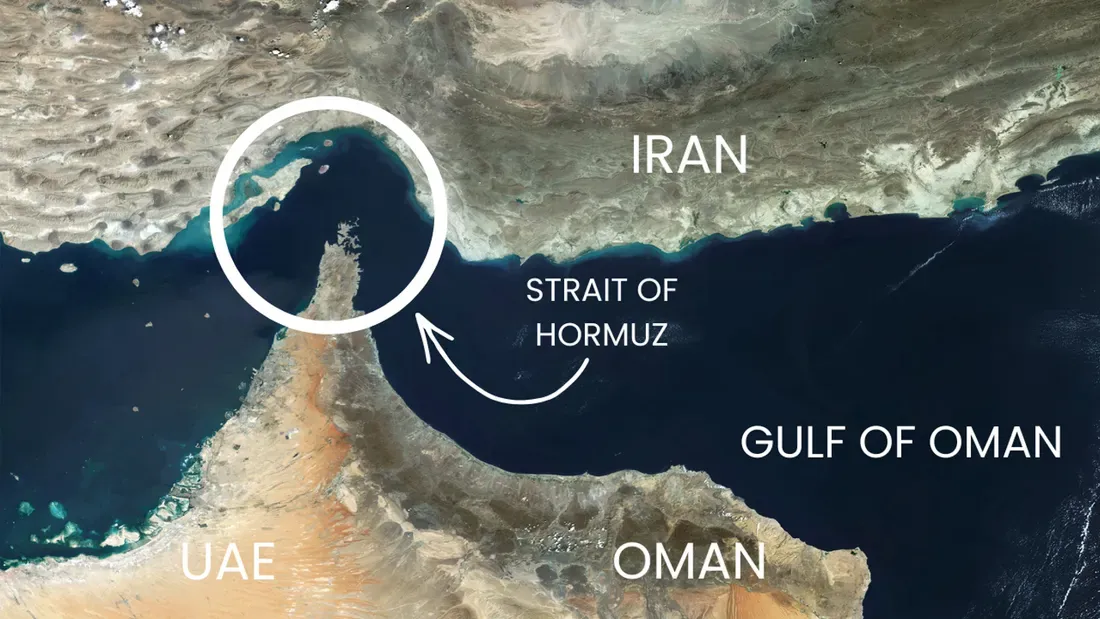
Iran’s parliament is considering legislation that would prevent ships linked to the United States, Israel and other countries classified by Tehran as hostile from passing through the Strait of Hormuz, creating a new obstacle to efforts to restore normal energy shipments through the strategically important waterway.
Iran’s semi-official Fars News Agency reported Thursday that the National Security and Foreign Policy Committee is reviewing a preliminary bill titled the “Strategic Action for the Security and Sustainable Development of the Strait of Hormuz and the Persian Gulf.”
The proposal remains at the expert-review stage and has not been approved by parliament. Lawmakers have invited specialists to submit recommendations before the legislation is finalized.
The Strait of Hormuz handled roughly one-fifth of global oil and gas flows before the latest conflict, making any restrictions on navigation a significant risk for energy prices, tanker operators and international trade.
According to Iranian lawmaker Alireza Salimi, the proposed legislation would prohibit vessels from the United States, Israel and other designated adversaries from navigating the strait.
The restrictions would also apply to military and civilian cargo connected to Israel, as well as ships or goods associated with operations against Iran and its regional allies. Countries, organizations and individuals accused of causing losses to Iran could remain barred until Tehran receives compensation.
Ships that violate the proposed law could be fined as much as 20% of the value of their cargo. Separate reports indicate that Iran could seek commercial service fees of up to 7% of cargo value from some vessels allowed to pass.
The draft would authorize Iran’s government and armed forces to direct navigation, monitor maritime traffic and oversee security and environmental protection in the Persian Gulf.
However, the parliamentary legislation is separate from the navigation framework currently being negotiated between Iran and Oman. While the two proposals overlap, neither has been formally approved or implemented.
The United States quickly rejected the conditions outlined in Iranian reports.
A US official told CNBC that any temporary shipping corridor must operate without additional approvals, licenses, tolls or other barriers. Washington maintains that the Strait of Hormuz is an international waterway and that Iran cannot determine which countries or vessels are entitled to use it.
The dispute exposes the central difference between the two sides. Washington wants the restoration of unrestricted commercial navigation, while Tehran is seeking a formal role in controlling traffic and collecting payments for navigation, security or environmental services.
Thomas Warrick, a former US State Department official and current nonresident senior fellow at the Atlantic Council, said the latest positions were unlikely to satisfy Washington. Rather than moving toward compromise, the United States and Iran appear to be increasing their demands as negotiations advance.
Iran and Oman have separately been discussing a temporary framework for managing commercial traffic through the strait.
According to sources cited by Reuters, the proposed arrangement would give Iran responsibility for ships entering the Persian Gulf, while outbound traffic would eventually be supervised jointly by Iran and Oman.
Fars reported that traffic would be redirected through a central corridor. The two routes currently receiving limited use—one closer to Iran and the other near Oman—would be phased out within a specified period.
Iranian officials said Tehran and Muscat had agreed on the geographical coordinates of the proposed corridor and were completing the language of a joint statement. Iran nevertheless emphasized that the arrangement would not automatically amount to a full reopening of the strait, which could still depend on Washington ending its blockade of Iranian ports.
The United States, Iran and Oman have also reportedly discussed a temporary period of approximately 60 days during which commercial vessels could use the corridor without paying tolls. What would happen after that period remains unresolved.
Even if negotiators reach a political agreement, sanctions and insurance requirements could prevent shipping companies from using an Iran-controlled payment system.
The US Treasury has sanctioned the Persian Gulf Strait Authority, an Iranian entity created to manage transit requests and collect payments from commercial vessels. Washington alleges that the authority is part of an effort by Iran’s Islamic Revolutionary Guard Corps to pressure international shipping and generate revenue.
The United States has also designated the Persian Gulf Marine Insurance Company and the Hormuz Safe Marine Services Authority, accusing them of operating coercive insurance and maritime-service programs. Payments to sanctioned entities could expose shipowners, banks and intermediaries to asset freezes or other penalties.
Insurance rules create an additional barrier. On July 23, the Lloyd’s Market Association introduced model clause LMA5708, allowing marine hull insurers to terminate coverage when a shipowner pays a transit fee, toll or other consideration connected to passage through the strait.
Shipping companies could therefore face an impossible choice: refuse Iran’s requested payment and risk being denied passage, or pay the charge and potentially lose insurance coverage while violating sanctions.
The negotiations are unfolding against an unstable military backdrop.
Fars reported Thursday that Iranian naval forces had attacked what it described as “hostile targets” near the entrance to the strait. The report cited unidentified sources and provided no information about the targets, damage or casualties. There was no immediate independent confirmation.
President Donald Trump said Thursday that discussions with Iran were progressing and that an agreement over Hormuz could be reached soon. He also suggested that the conflict would not continue much longer, although Tehran continues to insist it is negotiating with Oman rather than directly with Washington.
Previous predictions of an imminent agreement have repeatedly failed to produce a final settlement. Iran has also accused the White House of repeatedly issuing threats and subsequently withdrawing them, describing Washington’s approach as repetitive “theatrical diplomacy.”
Any final Iranian agreement is expected to require approval from Supreme Leader Mojtaba Khamenei. He has remained out of public view since being injured during US-Israeli strikes in February. Iranian President Masoud Pezeshkian said Wednesday that communicating with Khamenei remained “very difficult,” adding another source of uncertainty to the approval process.
Oil prices advanced as investors concluded that the proposed Iran-Oman framework might not restore energy shipments as quickly or as broadly as previously hoped.
Brent crude moved above $82 per barrel on Thursday and traded near $83.49 in early August 7 trading, while West Texas Intermediate also recovered.
The latest proposals offer a possible route toward increased shipping, but they do not yet resolve the dispute over control, fees, sanctions or unrestricted access. Until those questions are answered, the Strait of Hormuz is likely to retain a significant geopolitical premium in global oil prices.
Risk Warning: This article is provided for informational purposes only and does not constitute investment advice, investment research, or a recommendation to trade. The views expressed are those of the author and do not necessarily reflect the position of Markets.com. When considering shares, indices, forex (foreign exchange), and commodities for trading and price predictions, remember that trading CFDs involves a significant degree of risk and may not be suitable for all investors. Leveraged products can result in capital loss. Past performance is not indicative of future results. Before trading, ensure you fully understand the risks involved and consider your investment objectives and level of experience. Cryptocurrency CFD trading restrictions may apply depending on jurisdiction.
Latest
View all
Thursday, 6 August 2026
5 min
Thursday, 6 August 2026
7 min

Wednesday, 5 August 2026
6 min

Thursday, 6 August 2026
Indices
Gold Price Today, August 7: XAU/USD Holds Near $4,250 Before US Jobs Report

Thursday, 6 August 2026
Indices
Western Digital Stock Falls 13% and Sandisk Slides 7% as Guidance Disappoints

Thursday, 6 August 2026
Indices
SpaceX Stock Jumps 6% on $100 Billion Unlock Day as Earlier Selloff Absorbs Supply Shock

Thursday, 6 August 2026
Indices
Alphabet Stock Falls as AI Leadership Changes and $25 Billion Bond Sale Raise Spending Questions

Thursday, 6 August 2026
Indices
AVGO Stock News Today: Broadcom Gains as AI Chip Momentum and September Earnings Move Into Focus

Thursday, 6 August 2026
Indices
US Nonfarm Payrolls Preview: Hiring Slows While Layoffs Stay Near Historic Lows
Thursday, 6 August 2026
Indices
Iran’s Strait of Hormuz Bill Would Bar US and Israeli Ships as Washington Rejects Any Restrictions


 EN
EN





