
Access Restricted for EU Residents
You are attempting to access a website operated by an entity not regulated in the EU. Products and services on this website do not comply with EU laws or ESMA investor-protection standards.
As an EU resident, you cannot proceed to the offshore website.
Please continue on the EU-regulated website to ensure full regulatory protection.
Saturday Mar 28 2026 00:00

4 min
Iran's nuclear ambitions have long been a source of persistent international concern. Western nations have consistently expressed their belief that Tehran is pursuing nuclear weapons, or at least the capability to produce them rapidly. However, Iran has consistently refuted these accusations, asserting that the late leader Ayatollah Ali Khamenei issued a religious edict prohibiting nuclear weapons based on Islamic law, and that the country is a committed member of the Nuclear Non-Proliferation Treaty (NPT).
Larijani, whose brother Ali Larijani, a senior Iranian official, was killed in an airstrike this month, added: "The implementation of the NPT should be suspended. We should form a committee to evaluate whether the treaty is still useful for Iran. If it is, we will rejoin; if not, we will set it aside."
Sources indicate that nuclear policy has also become a subject of clandestine debate within the ruling elite, with differing viewpoints between hardline factions, such as the IRGC, and political leadership regarding the wisdom of such moves. Although Iranian officials have historically used the threat of reconsidering their treaty membership as a negotiation strategy, they have never acted upon it. The increasingly public debate might be a reiteration of this strategy.
In the early 21st century, Khamenei issued a religious ruling deeming nuclear weapons to be contrary to Islamic teachings, though this fatwa was never officially published. In 2019, Khamenei reiterated this stance. However, credible sources suggest that the demise of key figures like Khamenei, as well as Ali Larijani, who represented a moderating voice against hardline sentiments, has made it increasingly difficult to counter hardline arguments. It remains unclear whether the obligations stemming from Khamenei's unpublished religious ruling will remain in effect after his death. It is likely to remain in effect unless the new Supreme Leader, his son Mojtaba Khamenei, officially revokes it. Mojtaba Khamenei has not appeared publicly since his father's passing.
Risk Warning: This article is provided for informational purposes only and does not constitute investment advice, investment research, or a recommendation to trade. The views expressed are those of the author and do not necessarily reflect the position of Markets.com. When considering shares, indices, forex (foreign exchange), and commodities for trading and price predictions, remember that trading CFDs involves a significant degree of risk and may not be suitable for all investors. Leveraged products can result in capital loss. Past performance is not indicative of future results. Before trading, ensure you fully understand the risks involved and consider your investment objectives and level of experience. Cryptocurrency CFD trading restrictions may apply depending on jurisdiction.
Latest
View all
Tuesday, 11 August 2026
5 min

Tuesday, 11 August 2026
5 min

Tuesday, 11 August 2026
7 min

Tuesday, 11 August 2026
Indices
Gold Price Today, August 12, 2026: XAU/USD Rises 0.5% Near $4,400 Ahead of US CPI

Tuesday, 11 August 2026
Indices
Oil Nears $90 as Fading U.S.-Iran Deal Hopes Renew Hormuz Supply Fears
Tuesday, 11 August 2026
Indices
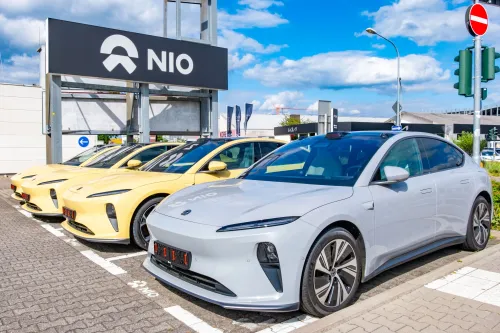
NIO Stock News Today: Shares Slide as BlackRock Trims Stake Despite Record ES9 Demand

Tuesday, 11 August 2026
Indices
USD to JPY Exchange Rate May Have Peaked, Eurizon Sees Yen Strengthening to 125

Tuesday, 11 August 2026
Indices
Supermicro Stock Rallies as Margin Recovery and FY2027 Outlook Eclipse Q4 Revenue Miss

Tuesday, 11 August 2026
Indices
US CPI Preview: Softer July Inflation Could Reduce Fed Rate Hike Bets


 EN
EN





